Structures That Stay Clear of Roosting Problems
Commercial Bird Netting in Oakdale for facilities affected by nesting activity and sanitation concerns
PC Capital Management designs and installs commercial bird netting at facilities where pigeon and swallow activity creates operational and maintenance burdens. Food preparation buildings, manufacturing sites, gas station canopies, and solar carports all face contamination risks when birds establish access to covered structures. The company holds Bird B Gone Certified Installer status, which ensures netting systems are specified and installed according to manufacturer protocols that account for both structural design and the pressure level created by local bird populations.
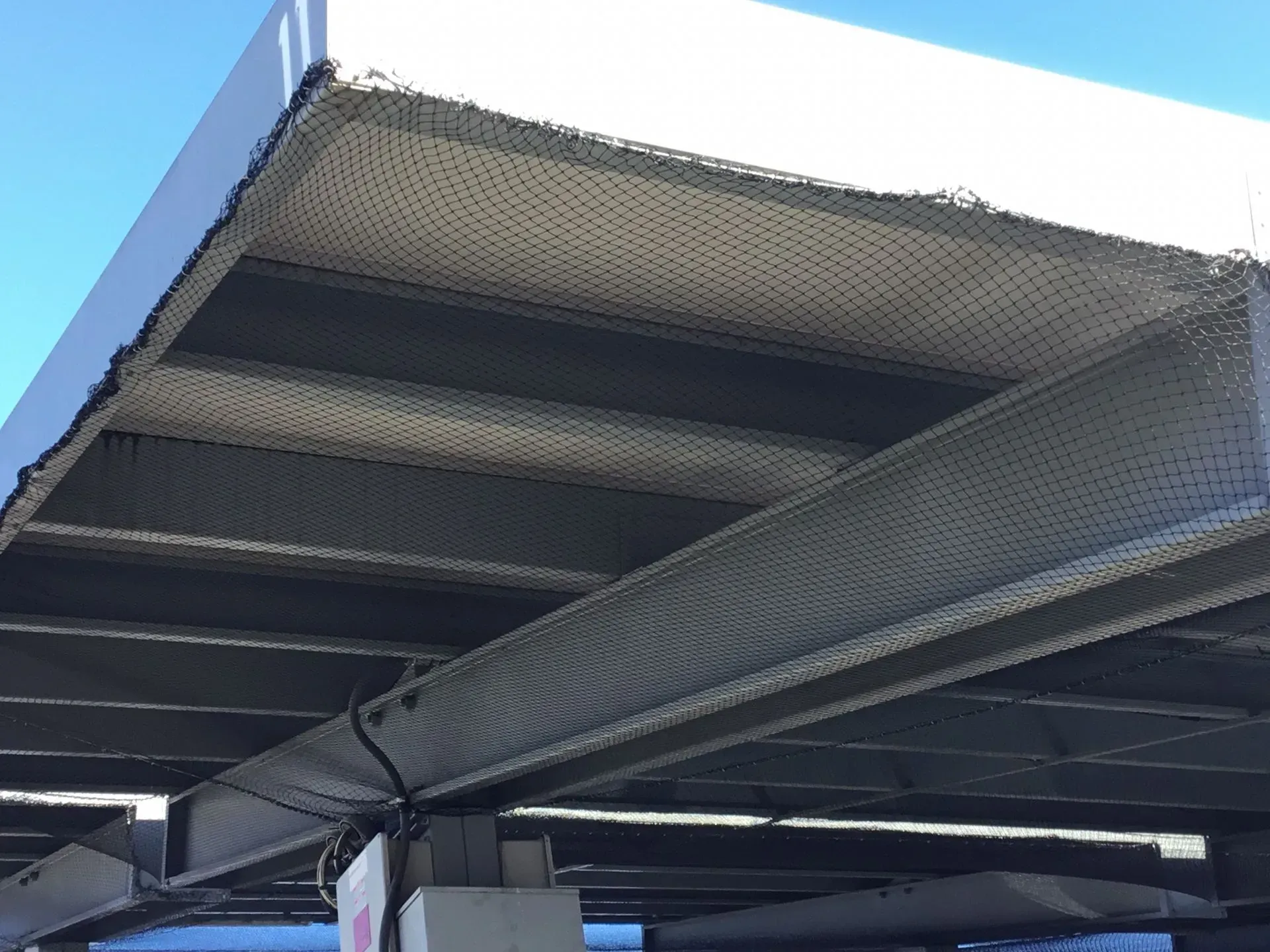
Commercial netting functions as a permanent physical barrier that denies birds access to beams, rafters, and sheltered alcoves where they roost and build nests. Installation is custom-fitted to the building envelope, attachment points, and overhead framework, and the netting material is selected based on species size and the volume of activity observed during assessment. Properties with active pigeon colonies require different mesh specifications than facilities managing seasonal swallow nesting, and the netting layout changes depending on whether birds are entering from open sides, gaps in soffits, or structural seams.
Schedule an on-site commercial assessment to evaluate nesting locations and determine the netting configuration suited to your facility.
How Netting Addresses Bird Pressure Long-Term
Netting installation begins with a structural survey that identifies all entry points, roosting zones, and areas where droppings accumulate. Attachment hardware is anchored to beams, purlins, or building edges, and the netting is tensioned across the protected zone to eliminate gaps that allow entry. Bird B Gone systems are designed around UV-resistant materials that maintain structural integrity across years of weather exposure, and certified installation ensures the grid pattern and anchor spacing meet load requirements for wind and debris contact.
Once netting is in place, you will notice the absence of fresh droppings beneath canopies, the elimination of nesting material buildup in overhead areas, and the end of maintenance cycles triggered by bird waste on equipment or surfaces below. Gas station operators see cleaner pump canopies, solar carport managers avoid panel shading caused by nesting debris, and food facilities maintain sanitation standards without recurring contamination from overhead bird activity. The netting remains functional without requiring seasonal removal or adjustment, and properly tensioned systems do not sag or create new perching opportunities along the edges.
Netting does not address existing waste or nesting materials already present at the time of installation. Cleanup of accumulated droppings and debris should be completed before the barrier is installed to ensure the protected area starts in sanitary condition. Some facilities combine exclusion with waste removal as part of a coordinated project that resolves both contamination and future access in a single mobilization.
What Commercial Property Managers Want to Know
Facility managers and property operators in Oakdale often ask about netting durability, installation timing, and how the barrier integrates with existing building systems.
What types of commercial structures benefit most from bird netting?
Food preparation facilities, manufacturing buildings with open-sided canopies, gas stations with overhead coverage, and solar carports where droppings affect equipment all benefit from exclusion netting that prevents roosting access.
How is netting customized for different bird species?
Pigeons require a larger mesh opening than swallows, and netting is specified based on the species observed during the site assessment, along with the density of the colony and the number of active entry points.
What happens during the installation process?
Installers anchor mounting hardware to structural members, stretch netting across the protected zone, and tension the material to eliminate slack that could allow birds to land or push through, with all attachment points checked for load distribution and weather resistance.
How long does commercial netting last once installed?
UV-stabilized netting materials used in Bird B Gone systems typically maintain structural performance for multiple years without sagging or tearing, and certified installation reduces the risk of premature failure caused by incorrect tensioning or inadequate anchor spacing.
Can netting be installed while the facility remains operational?
Most installations proceed without requiring full facility shutdowns, though work may be scheduled during off-peak hours to avoid interference with production, customer access, or equipment operation beneath the canopy.
PC Capital Management evaluates bird pressure, structural layout, and access patterns to recommend netting systems that maintain long-term effectiveness. Arrange a facility walkthrough to review nesting zones and discuss installation options for your commercial property.

Official Bird B Gone Certified Installers
Pest birds nesting underneath solar panels pose a direct threat to system performance, wiring integrity, and long-term energy output. Standard deterrents often fail—proper protection requires factory-trained expertise.
As an official Bird B Gone Certified Installer, PC Capital Management is certified to install commercial-grade bird exclusion systems designed specifically to protect solar arrays without damaging equipment or voiding warranties.
What Being a Certified Installer Means for Your Solar Investment
BIRD B GONE CERTIFIED INSTALLER STANDARDS
Authorized Hardware
Exclusive access to Bird B Gone's USA-made, commercial-grade solar mesh and barrier systems.
Warranty-Safe Clips
Specialty tensioning clips that secure barriers firmly without drilling into panel frames.
Factory-Trained Teams
Certified through Bird B Gone University in professional bird abatement and site safety.
Full Site Remediation
Complete service including bird waste removal, sanitation, and precision panel cleaning.
Why Choose a Bird B Gone Certified Installer?
Certified Perimeter Protection
We lock out pigeons, sparrows, and pest birds with specialized physical mesh that withstands harsh California weather.
Preserve Solar Warranties
Non-invasive mounting hardware keeps panel structures and manufacturer warranties completely intact.
Stop Costly Damage
Protect critical wiring, junction boxes, and roof surfaces from corrosive droppings, nesting heat traps, and pest gnawing.